IBC totes are one of the most practical containers for bulk DEF storage — the 275-gallon (1,040L) and 330-gallon (1,249L) sizes are standard in fleet operations, agriculture, and construction. But DEF has strict material requirements that most people don't know about, and using the wrong pump or fittings can contaminate an entire tote and void diesel engine warranties.
This guide covers everything: whether standard IBC totes are compatible with DEF, what pumps and heaters actually work, how to set up a complete dispensing system, and the rules for diesel fuel storage as well.
DEF vs. Diesel — Two Different Products, Two Different Rules
DEF (Diesel Exhaust Fluid) and diesel fuel are both stored in IBC totes by fleet operators and farms — but they have completely different storage requirements. Confusing the two is a costly mistake.
- 32.5% urea + 67.5% deionized water
- Used in SCR systems on diesel engines (2010+)
- Corrosive to copper, brass, zinc, carbon steel
- Freezes at 12°F — thaws without degradation
- Degrades above 95°F and in UV light
- ISO 22241 governs storage requirements
- Must use DEF-specific pump and fittings
- Petroleum distillate — flammable liquid
- Used directly in diesel engines
- Compatible with standard HDPE totes
- No freeze concern at normal temps
- Stable in sealed containers for 6–12 months
- EPA / fire code governs storage requirements
- Use fuel-rated pump — water pumps will fail
Are Standard IBC Totes Compatible with DEF?
Yes — the HDPE inner bottle is fully compatible with DEF. Standard composite IBC totes use a high-density polyethylene (HDPE) inner bottle, which is listed as an acceptable material under ISO 22241 for DEF storage. The galvanized steel cage is structural only — it does not contact the fluid — so it presents no compatibility issue.
The tote itself is not the problem. The pump, fittings, hoses, and valve are where most people go wrong. DEF is highly corrosive to metals that are perfectly fine for water or most other fluids.
Material Compatibility — What DEF Will and Won't Tolerate
This is the most important section in this guide. DEF reacts with certain metals and rapidly degrades, becoming ineffective and potentially damaging to SCR systems. Engine manufacturers can — and do — void warranties when contaminated DEF is identified.
| Material | DEF Compatible? | Notes |
|---|---|---|
| HDPE (polyethylene) | ✓ Yes | Standard IBC tote bottle — fully compatible |
| Polypropylene (PP) | ✓ Yes | Many DEF pump housings use PP |
| Stainless Steel 316L | ✓ Yes | Only grade of stainless acceptable for DEF |
| EPDM rubber | ✓ Yes | Acceptable for seals, gaskets, and hoses |
| Viton (FKM) | ✓ Yes | Acceptable for seals |
| Copper | ✗ No | Reacts with urea — contaminates DEF immediately |
| Brass | ✗ No | Contains copper and zinc — avoid all brass fittings |
| Zinc (galvanized) | ✗ No — wetted parts only | Galvanized cage is fine (no contact); galvanized fittings are not |
| Carbon steel / iron | ✗ No | Corrodes rapidly in DEF — never use for wetted components |
| Aluminum | ⚠ Caution | Acceptable for short-term contact only — not for storage components |
| Standard IBC butterfly valve | ⚠ Check specs | Many contain brass internals — verify before use or replace with DEF-rated valve |
Best DEF IBC Totes (2026)
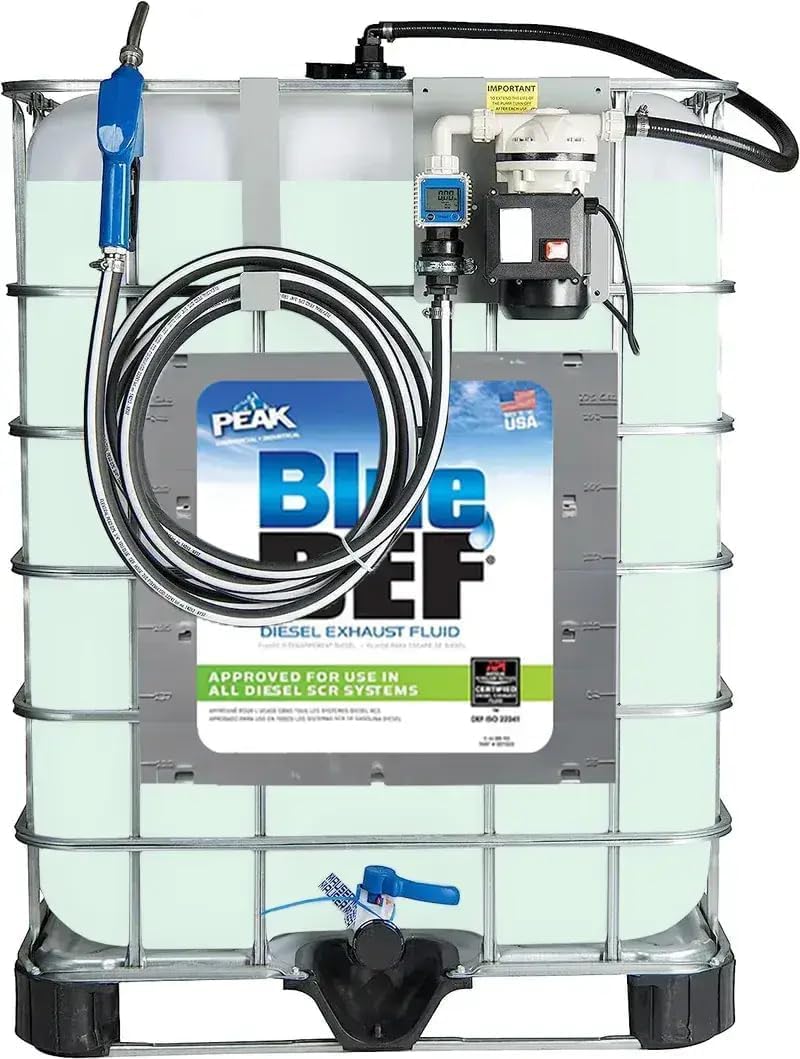
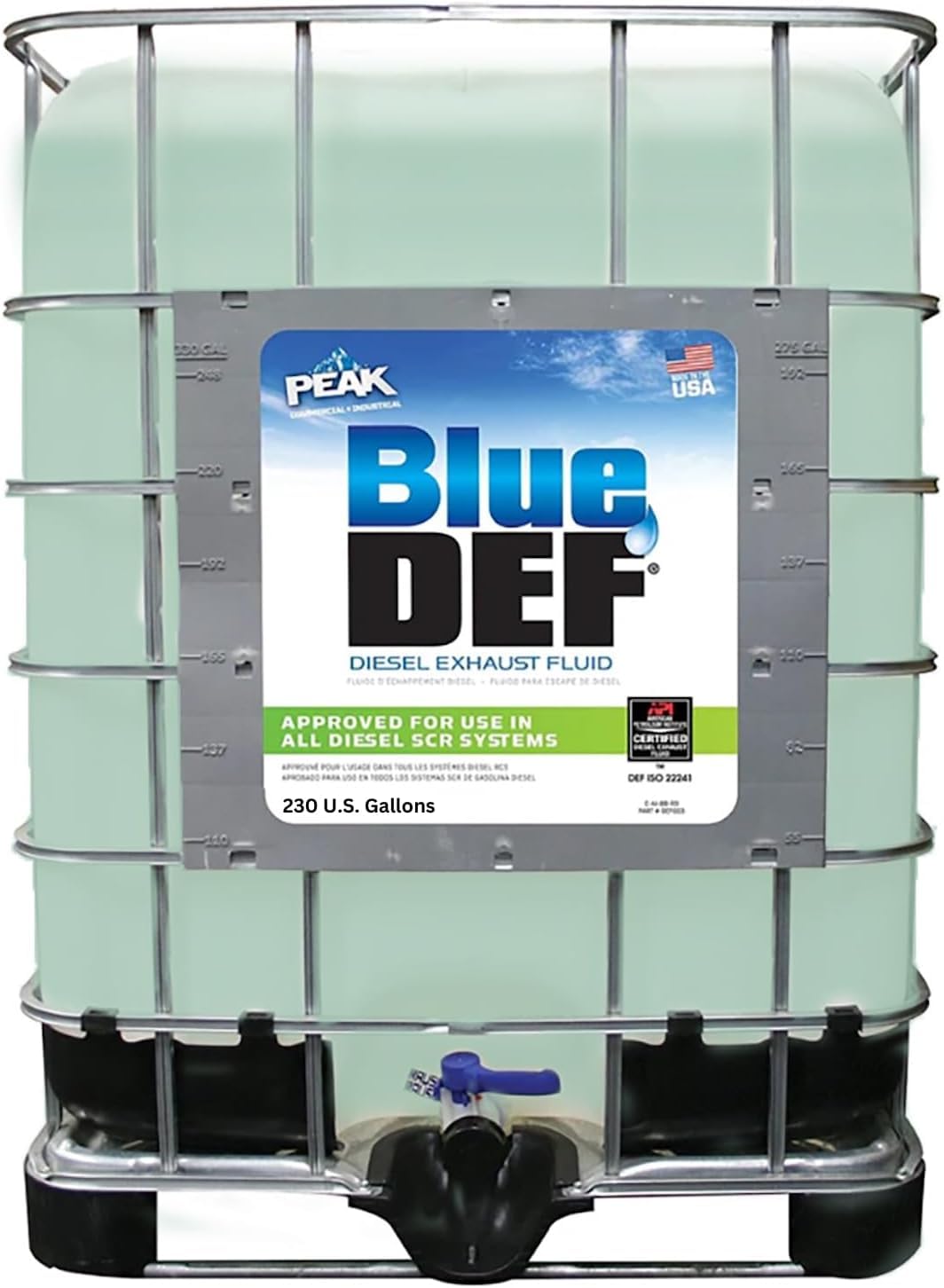
All four picks below are BlueDEF — the dominant brand for pre-filled DEF totes on Amazon, ISO 22241 and API certified. Choose the 330-gallon for maximum run time between orders; choose a 200-gallon if space or access is a constraint. The pump-included option eliminates the need to source a separate dispensing system.


DEF Tote Pumps
A standard water pump or general-purpose transfer pump will contaminate DEF through its internal metal components. You need a pump with all wetted parts made from DEF-compatible materials — HDPE, polypropylene, 316L stainless, or EPDM only.
DEF Tote Heaters
DEF freezes at 12°F (-11°C). It thaws completely without degradation, so a single freeze event won't ruin your DEF — but a frozen tote means no fluid dispense when you need it most. In climates that regularly drop below 20°F, a heating blanket or band heater on the tote is the practical solution.
DEF Tote Covers
UV exposure degrades DEF quality — extended sunlight breaks down the urea concentration over time and can reduce shelf life from 2 years to as little as 6 months. If your DEF tote is stored outdoors, a UV-blocking cover is not optional. It also extends the life of the HDPE inner bottle, which becomes brittle with prolonged UV exposure.
DEF IBC Tote Dispensing Systems
For fleet operations dispensing DEF daily, a complete skid-mounted or tote-mounted dispensing system eliminates the mess and measurement errors of manual filling. A full DEF dispensing system for an IBC tote typically includes:
- DEF-rated electric pump (12V or 120V) — the fluid mover
- Flow meter — tracks gallons dispensed per fill for fleet recordkeeping
- Auto-shutoff nozzle — prevents overfill and spills
- DEF-rated hose (10–25 ft) — reaches truck-mounted DEF tanks
- Suction tube and tote adapter — connects to the IBC tote bung or bottom valve
- Optional: cabinet or enclosure — weather protection for outdoor installations
Pre-packaged kits from GPI, Fill-Rite, and Tecalemit are available through Amazon and fleet supply distributors. For high-volume operations (10+ vehicles per day), a fixed wall-mount pump with a dedicated DEF line from the tote is more efficient than a portable kit.
Diesel Fuel Storage in IBC Totes
Yes, you can store diesel fuel in a standard HDPE composite IBC tote. HDPE is compatible with diesel — it does not degrade, swell, or leach into the fuel. The standard 2-inch butterfly valve is also compatible with diesel fuel, unlike DEF.
What you need for diesel storage:
- New or documented-clean tote — never use a tote with unknown previous contents for fuel. Contamination from prior chemicals cannot be adequately cleaned from HDPE for fuel use.
- Fuel-rated transfer pump — a water pump will fail rapidly with fuel. Use a pump rated for diesel, such as the Fill-Rite FR1210G or a similar UL-listed fuel transfer pump. See our pump guide for options.
- Spill containment pallet — required by EPA for any fuel storage above 55 gallons. A 275-gallon fuel tote requires a containment pallet rated for the full volume. See our spill containment guide.
- Local fire code compliance — above-ground diesel storage has NFPA and local fire code requirements that vary by jurisdiction. Storage over 660 gallons typically requires a permit. Verify requirements with your local fire marshal before storing more than one tote.
Diesel shelf life in an IBC tote:
Diesel stored in a sealed HDPE tote remains stable for 6–12 months under normal conditions. After 12 months, microbial growth and oxidation can degrade fuel quality — add a diesel fuel stabilizer such as STA-BIL diesel formula if storing longer than 6 months. Keep the tote full to minimize air space, which slows oxidation.
Frequently Asked Questions
