How to Choose an IBC Tote Mixer
Four factors determine the right mixer for a 275-gallon IBC tote: the viscosity of what you're mixing, whether your environment requires explosion-proof equipment, whether you have reliable power or compressed air, and the mounting span of the IBC cage you're working with.
| Factor | What to Check | Why It Matters |
|---|---|---|
| Shaft length | Must reach 900mm+ to effectively agitate the bottom of a 275-gal tote | A short shaft only mixes the top zone — settling continues at the base |
| Motor power | 500W minimum for low viscosity; 980W+ for medium; 2,100W for high-viscosity | Undersized motors stall on thick materials and fail early from overheating |
| Bracket span | Must be adjustable to span your IBC cage width (typically 40–48") | A fixed bracket that doesn't fit your cage makes installation impossible |
| Explosion-proof rating | Required for any flammable solvent or vapor environment | Standard electric motors produce sparks — a serious ignition hazard with solvents |
| Drive type | Electric for precise control; pneumatic for hazardous environments or portability | See the full comparison below |
Electric vs. Pneumatic — Which to Choose
- Precise speed control via variable speed or servo drive
- Smoother low-speed operation for delicate emulsions
- No compressed air infrastructure needed
- Best for indoor, non-flammable applications
- Smart controllers reduce splashing and improve consistency
- Inherently spark-free — safe with flammable solvents
- High starting torque — handles under-load startup
- Works in wet or washdown environments
- Portable — move between totes without electrical concerns
- Simple mechanical design; low maintenance
Viscosity & Power — Matching the Motor to the Material
| Viscosity Range | Example Materials | Recommended Power | Notes |
|---|---|---|---|
| 1–500 mPas (water-like) | Water, thin solvents, diluted fertilizer | 250–500W electric; 0.5HP pneumatic | Almost any mixer works; key is shaft length and coverage |
| 500–2,000 mPas (light oil) | Motor oil, light adhesives, thin paints, syrups | 500–980W electric; 0.5–1HP pneumatic | Ensure blade diameter is adequate for full tote coverage |
| 2,000–5,000 mPas (honey) | Heavy paints, coatings, resins, thick adhesives | 980–1,500W electric; 1HP pneumatic with gearbox | Gearbox-driven pneumatic or high-torque electric preferred |
| 5,000–20,000 mPas (molasses) | Heavy resins, some pastes, concentrated slurries | 1,500–2,100W electric | High-power electric with slow-speed gearbox; pneumatic may stall without adequate air supply |
| >20,000 mPas (thick paste) | Heavy greases, some ceramic slips, waxes | Purpose-built industrial mixer | Standard tote mixers are not appropriate — consult a mixing engineer |
| mPas = millipascal-seconds. Water = 1 mPas. These are approximate ranges — always verify with the fluid's technical data sheet. | |||
Safety — The Explosion-Proof Requirement
Top Picks (2026)
Reviewed across motor power, torque, speed range, build quality, mounting adjustability, maintenance requirements, and suitability for IBC tote dimensions. All models fit 275-gallon (1,000L) IBC totes with adjustable bracket mounting.
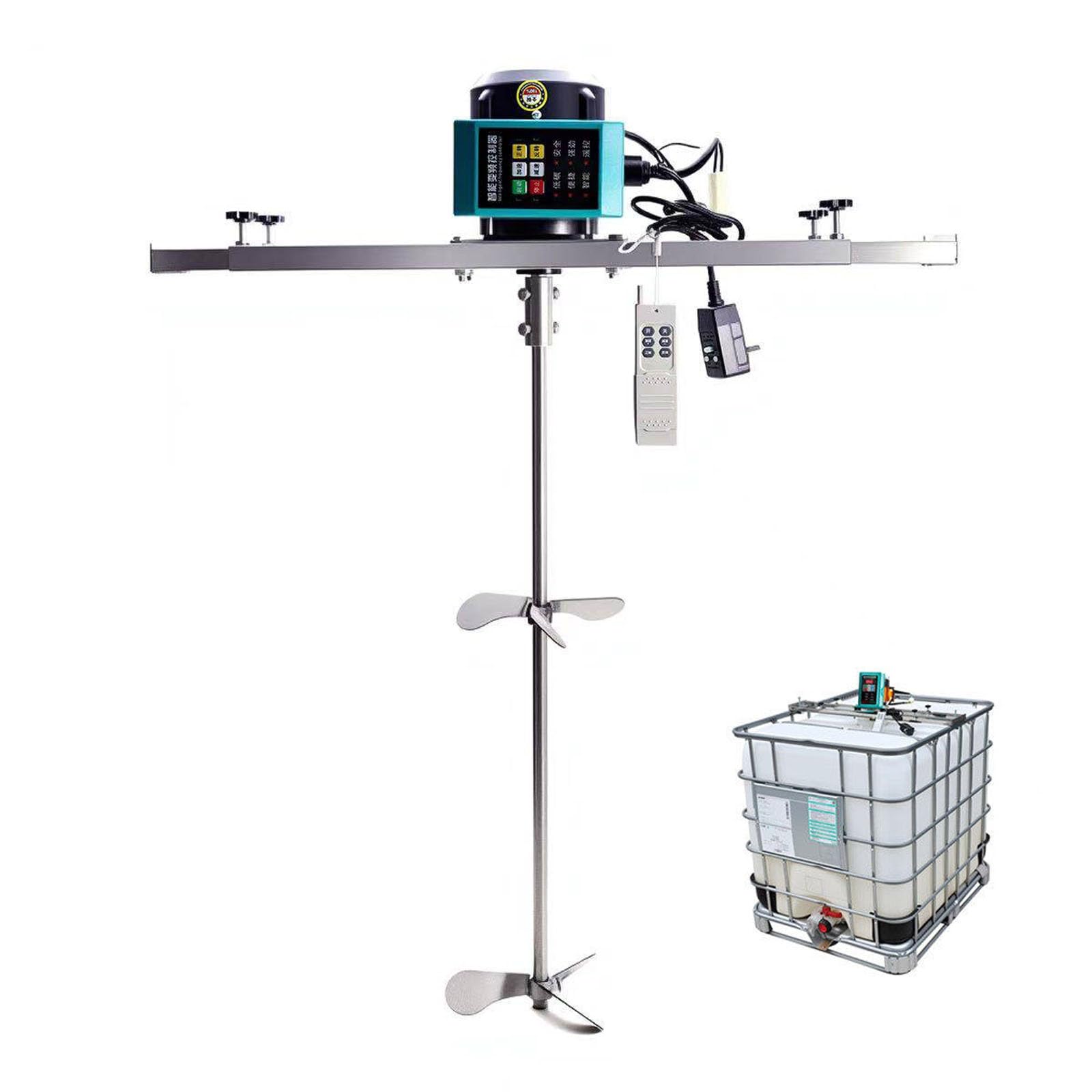
The Valdoza earns the top overall pick because of its unusually wide power range — 500W to 2,200W — which lets you match torque to material without buying a separate mixer for different jobs. The smart speed controller reduces splashing during startup, the 304 stainless shaft resists corrosion, and the reinforced triangle blades handle medium-viscosity work without bending. The 60–120cm adjustable mounting bracket fits most IBC cage widths.
Best for: daily workshop prep, regular batch runs, paints, adhesives, resins, and any non-flammable process water or liquid blend.
- Multiple power settings for flexible torque from light blending to aggressive agitation
- 304 stainless shaft and reinforced blades for repeated heavy-duty use
- Smart controller reduces splashing and improves batch consistency
- Not explosion-proof — non-flammable materials only

The Cosmostar's 3:1 gearbox differentiates it from direct-drive pneumatic options — the gearbox multiplies torque at the shaft, making it noticeably better on thick or viscous materials than same-HP direct-drive units. The stainless shaft and IBC-specific cage mount are well-built, and the air motor is forgiving under load.
The one honest limitation: the supplied EX12 propellers are thinner than ideal for very heavy-viscosity materials. For thick resins or adhesives, swapping to heavier-duty after-market propellers significantly improves performance. For paints, coatings, and moderate-viscosity materials, the supplied propellers are adequate.
- Geared air motor delivers higher torque than equivalent direct-drive pneumatic
- Stainless construction resists corrosion in industrial environments
- Air drive is inherently safe for use near flammable materials
- Consider upgrading propellers for very high-viscosity applications
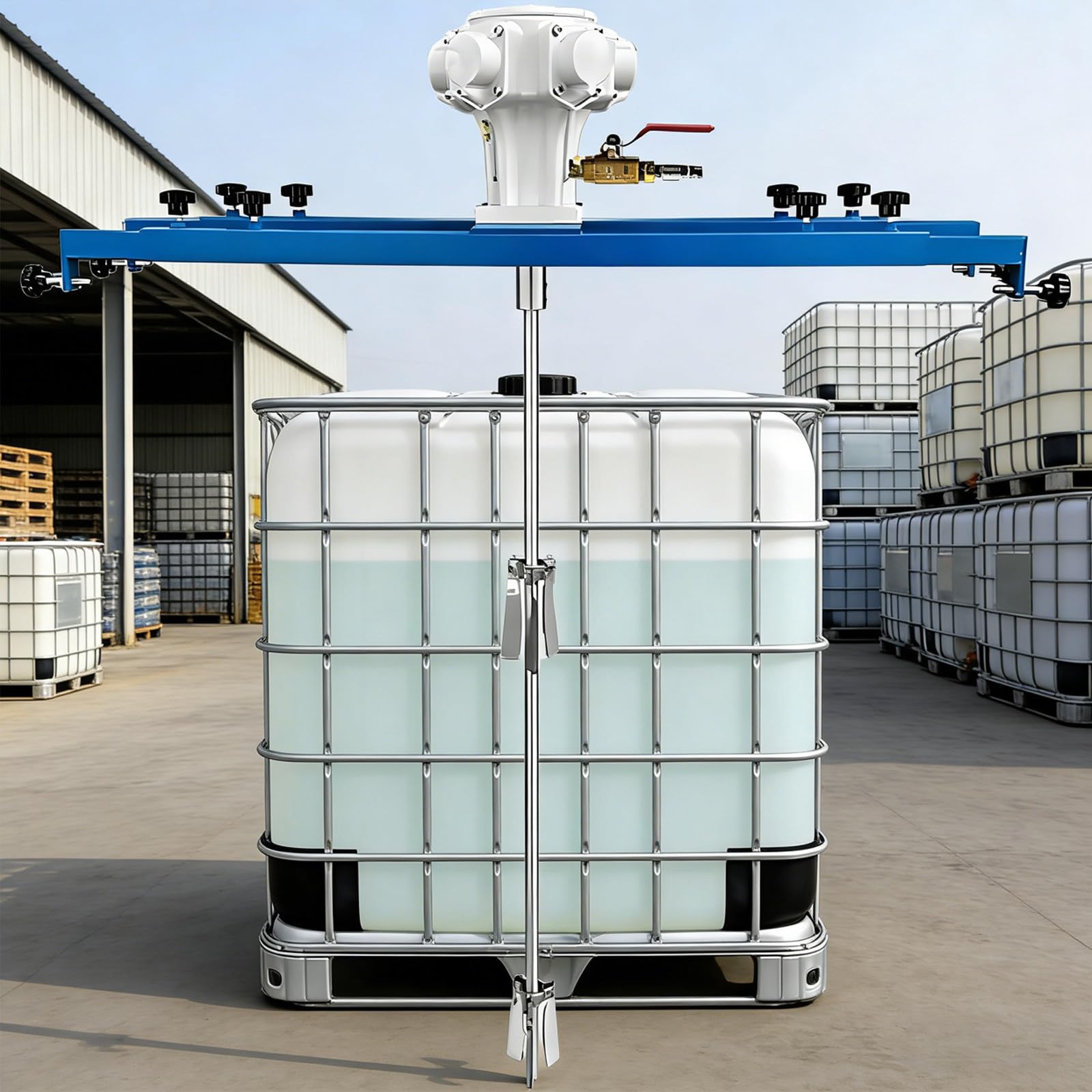
The HEIHEIZI is the pick for anyone working with flammable solvents, coatings containing combustible materials, or any environment where vapor ignition risk exists. The foldable propeller simplifies moving between IBC totes and storage, and the support hanger makes mounting and dismounting fast on mobile job sites. Stepless speed control lets you dial in precisely the right shear for different materials without hunting through preset speeds.
- Explosion-proof construction — safe for flammable solvent applications
- Stepless speed regulation for precise shear control
- Foldable propeller and support hanger for easy transport between totes
- Overload protection and one-button reversal for operational flexibility
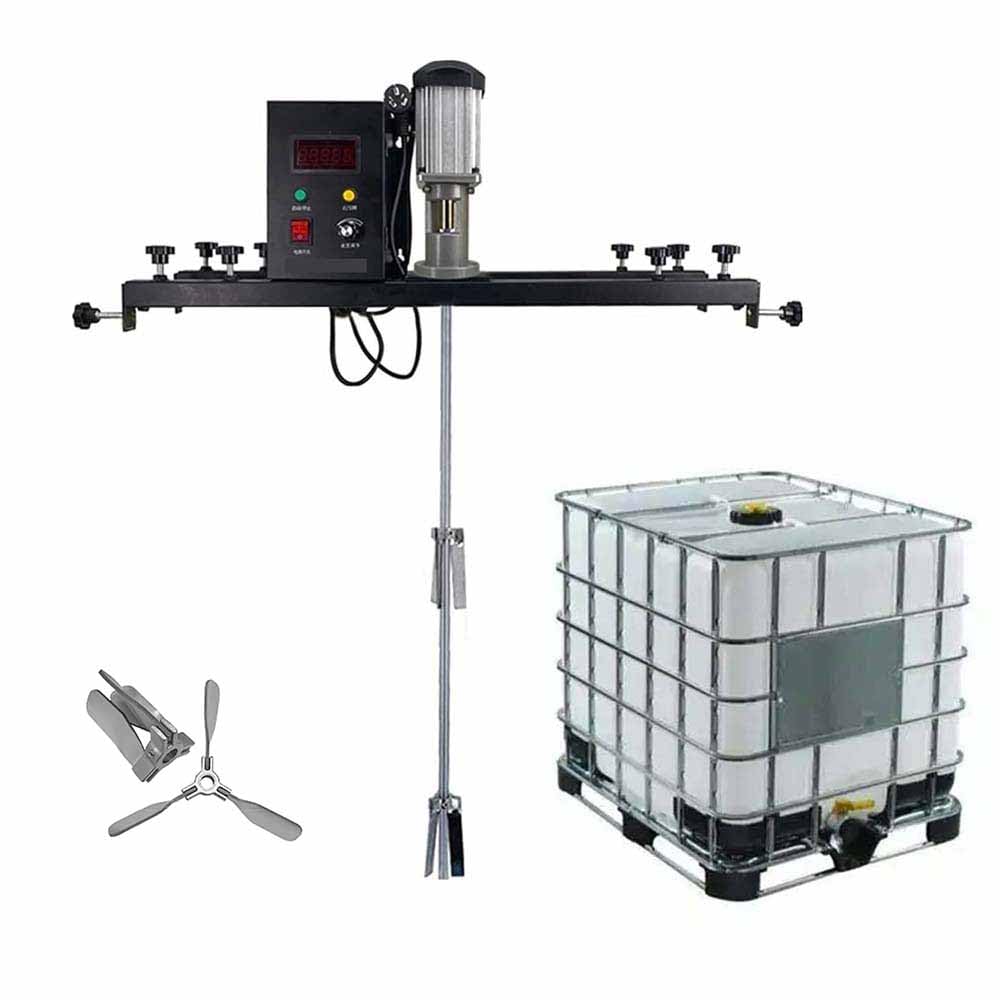
At 4,000 mPas maximum viscosity, the TEBILIKU covers a significantly wider viscosity range than most tote mixers at this price point. The 400mm blade diameter provides broad coverage across the full width of a 275-gallon tote, and the 900mm shaft reaches the bottom effectively. Overheat protection is a practical feature for longer mixing cycles with thick materials where motors work hardest. Speed adjustability to 1,000 RPM lets you match shear to the job.
- 4,000 mPas upper viscosity limit — handles heavy paints, thick adhesives, and viscous formulations
- Large 400mm blade diameter for broad coverage in a 275-gal tote
- Built-in overheat protection for extended runs
- Adjustable horizontal bracket fits IBC cage width
- Not explosion-proof — non-flammable materials only
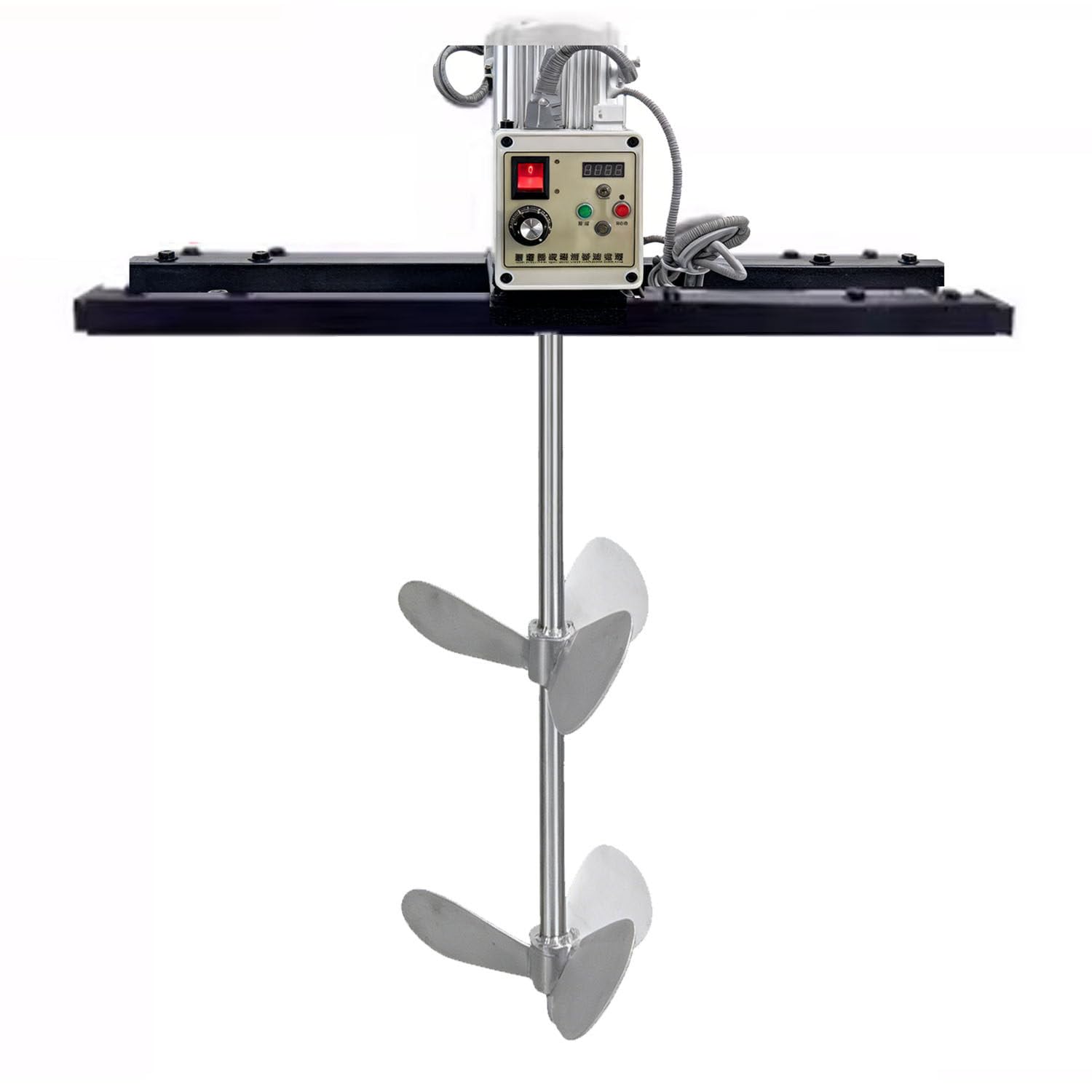
The DHMYYXGS is the highest-power option in this guide at 2,100W, making it the right choice for large-batch production with consistently high-viscosity materials. The wide speed range — 200 to 3,000 RPM — gives flexibility from gentle emulsion blending to aggressive agitation. The adjustable blade diameter (22–400mm) is a notable feature that lets you tune coverage to the specific material and tote combination.
- 2,100W motor handles the heaviest practical IBC tote mixing applications
- Wide speed range (200–3,000 RPM) for versatile shear control
- Adjustable blade diameter allows tuning for different materials and viscosities
- 304 stainless blade resists corrosion in aggressive process environments
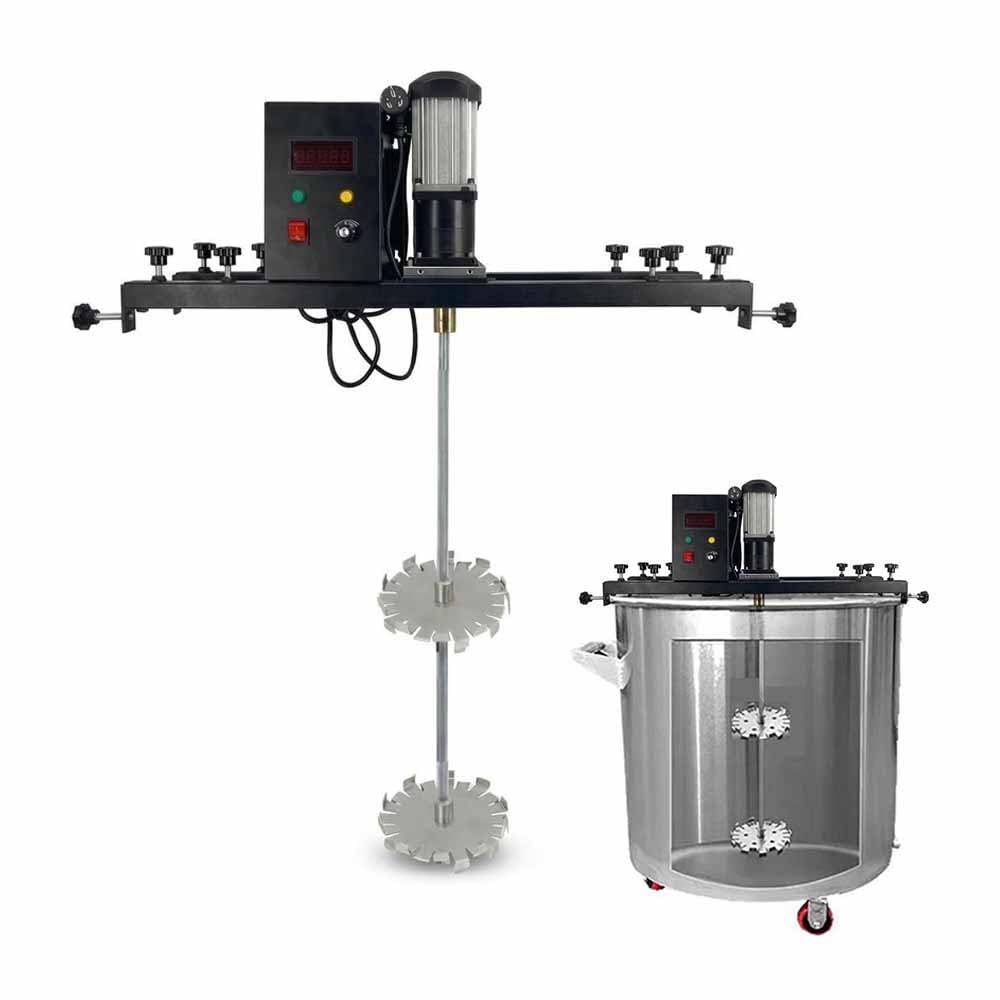
Designed specifically for open-top IBC configurations and large open-top frac tanks where the standard closed-top IBC lid cannot support an overhead bracket. The permanent magnet servo motor delivers exceptionally smooth low-speed control — ideal for delicate emulsions, cosmetics, or water treatment chemicals that separate under high shear. Dual 316 stainless dispersing discs provide better coverage than a single-impeller design at the same shaft position.
- Designed for open-top IBC and tank configurations
- Servo motor provides smooth low-speed control for shear-sensitive materials
- Dual 316 stainless impellers for broader coverage and better homogenization
- 316 stainless resists corrosion in aggressive water-based formulations
- Not explosion-proof — non-flammable materials only
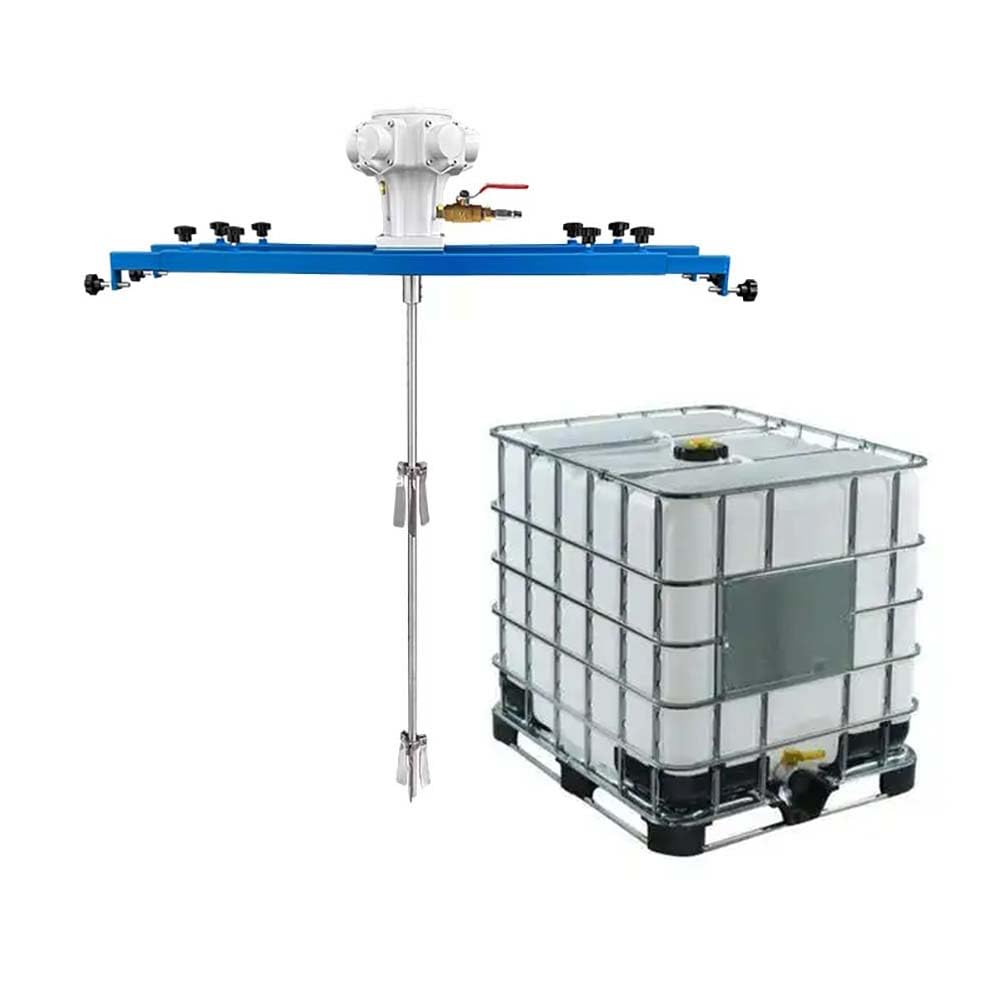
The Tsrbunon is the straightforward pneumatic pick for paint and coating work — the air-driven torque provides the high starting force needed to agitate settled pigments and additives, and the 960mm rod reaches well into the tote. The extendable rack spanning 28–47 inches accommodates a wide range of IBC cage widths. The air drive avoids electrical concerns common in paint and solvent environments. Setup takes some adjustment the first time, but once positioned it runs consistently for short-run jobs.
- 1HP air motor with strong starting torque — ideal for settled paint agitation
- 960mm rod reaches the bottom of a 275-gal tote effectively
- Extendable rack fits wide range of IBC cage widths
- Air drive avoids electrical ignition risk in paint and coating environments
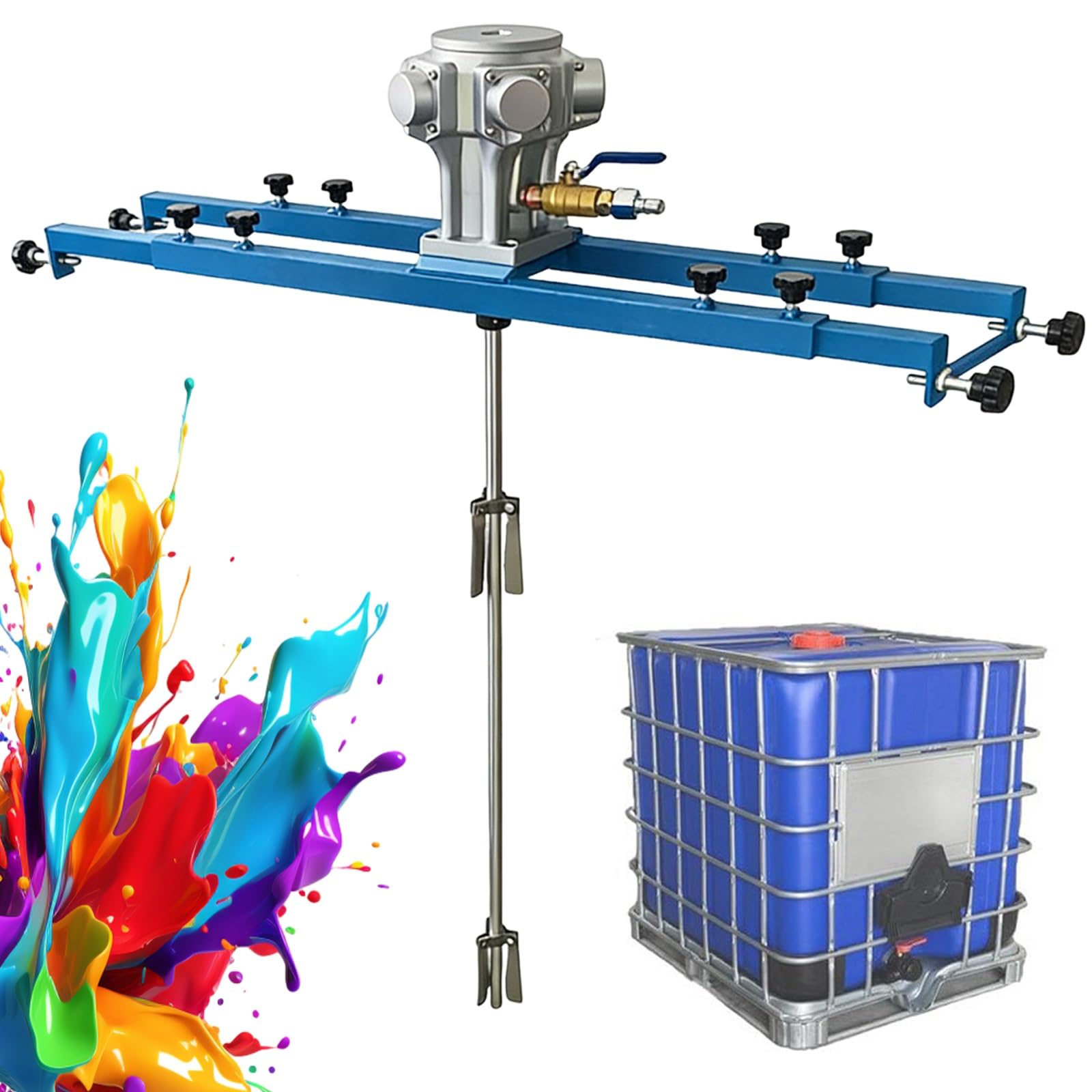
The Himopuer is the most budget-friendly pneumatic option with solid fundamentals: high starting torque from the air motor, a folding blade for easy transport between totes, and an all-copper intake valve for better corrosion resistance than standard fittings. The retractable mounting knob adjusts for different container widths — more flexible than a fixed-span bracket. Best for paints, adhesives, and moderate-viscosity liquids at job sites where moving between totes and drums is common.
- High starting torque for mixing under load from a stopped position
- Retractable mounting fits a range of IBC tote and drum widths
- Folding blade simplifies storage and transport between sites
- All-copper intake valve offers better corrosion resistance
- Air drive avoids electrical hazards in wet or flammable-risk areas
All 8 Picks at a Glance
| Mixer | Type | Power | Speed | Shaft | Explosion-Proof | Best For |
|---|---|---|---|---|---|---|
| Valdoza Industrial | Electric | 500–2,200W | Variable | 60–120cm adj. | No | Best overall; versatile range |
| Cosmostar M0707 | Pneumatic (geared) | N/A (air) | Variable | Stainless SUS | Inherently safe | Professional pneumatic; paints |
| HEIHEIZI Foldable | Pneumatic | 0.5–1HP | 0–2,500 RPM stepless | Standard | Yes (ATEX) | Hazardous/flammable environments |
| TEBILIKU (high visc.) | Electric | 980W | 0–1,000 RPM | 900mm | No | High viscosity up to 4,000 mPas |
| DHMYYXGS 2100W | Electric | 2,100W | 200–3,000 RPM | 90cm | No | Highest power; large batch production |
| TEBILIKU Open-Top | Electric (servo) | 980W | 0–600 RPM | 35.4" | No | Open-top tanks; delicate emulsions |
| Tsrbunon 1HP | Pneumatic | 1HP | 1,300 RPM | 960mm | Inherently safe | Paints & coatings; mobile sites |
| Himopuer Budget | Pneumatic | 0.5–1HP | 0–2,500 RPM | Standard | Inherently safe | Budget pneumatic; drum-to-IBC use |