IBC Tote Cap Sizes by Manufacturer
Cap size varies by manufacturer — this is the most common cause of returns. The "standard" 6.5-inch cap fits most North American IBCs, but Schutz, Mauser, Greif, and generic imports each have models that differ. Always measure your tote before ordering.
| Manufacturer | Cap Size | Metric Equivalent | Thread Type | Notes |
|---|---|---|---|---|
| Schutz Ecobulk MX (275–330 gal) | 6.5 inches | 165mm | Coarse buttress thread | Most common North American market tote; 6.5" picks in this guide are confirmed compatible |
| Schutz (some older / European models) | 6 inches | 150mm | Coarse buttress | Visually similar to 6.5" but cap will not seat correctly; measure before ordering |
| Mauser IBC (275–330 gal) | 6.5 inches | 165mm | Coarse buttress | Compatible with standard 6.5" replacement caps; check cage label for model confirmation |
| Greif Tri-Sure (275–330 gal) | 6.5 inches | 165mm | Coarse buttress | Standard sizing; 6.5" caps fit |
| Some industrial / European IBCs | 9 inches | 225mm | Varies | Less common; significantly larger opening; 6.5" cap will not fit — verify before ordering |
| Small center screw cap | 2 inches | 50mm | Fine thread | Present on some tote lids as a secondary access port; often confused with the main fill cap. This is not the large butterfly closure — do not try to replace this with a 6.5" cap. |
| Measure the outer diameter of the thread crest — not the inside opening — before ordering. Thread profiles can also differ between manufacturers; a cap that measures the same OD may still not thread correctly if the pitch differs. If unsure, contact the OEM: Schutz, Mauser, and Greif all sell brand-specific replacement lids directly. | ||||
Step 2: Record this measurement in inches. Most 275–330 gallon North American IBCs will measure 6.5 inches (165mm).
Do NOT measure the inside diameter of the opening — this produces a smaller number (approximately 5.5–6 inches for a 6.5" cap) and will cause you to order the wrong cap.
If you get 6.0–6.5 inches: Order a 6.5" cap.
If you get 5.5–6.0 inches: Order a 6" cap (150mm) — less common; confirm with your tote manufacturer.
If you get 8.5–9 inches: You have an industrial-size opening — check with your IBC supplier for the correct replacement.
How to Choose an IBC Tote Cap
Most IBC tote fill openings use a standard 6.5-inch diameter thread. Measure the outer diameter of the threads — not the inside of the opening — before ordering. Beyond size, the two decisions are vent design and material.
| Factor | What to Check | Why It Matters |
|---|---|---|
| Thread diameter | Measure outer edge of threads; most IBC totes use 6.5" (165mm) | Wrong size = cap that won't seat or seal |
| Vent hole | Single or double vent in the cap body | Allows air exchange during fill and draw; without it, vacuum builds as water flows out |
| Gasket | Included rubber or silicone gasket on seating surface | Creates a liquid-tight seal for storage and transport; more important than a vent for sealed long-term storage |
| Material | HDPE (high-density polyethylene) or general plastic | HDPE is UV-stable, food-compatible, and resists cracking; confirm food-safe if used for potable water |
| Additional ports | Some caps include a 2" threaded plug for cords, hoses, or small fittings | Useful for rain barrels, cabin heater cords, or routing a fill hose without opening the main cap |
- You fill the tote frequently and want air to escape during fast fills without gurgling
- You draw water via a pump or gravity feed and need air in-flow to prevent vacuum
- You're mounting a hose adapter or routing tubing through or near the cap opening
- Double vent is better than single when fill rate is high
- You're transporting totes and need to prevent any seepage at the top
- You're storing water long-term and want to exclude debris, insects, and evaporation
- Your existing cap leaks at the thread or has a worn seal
- Food-grade or potable water use where contamination matters most
Top Picks (2026)
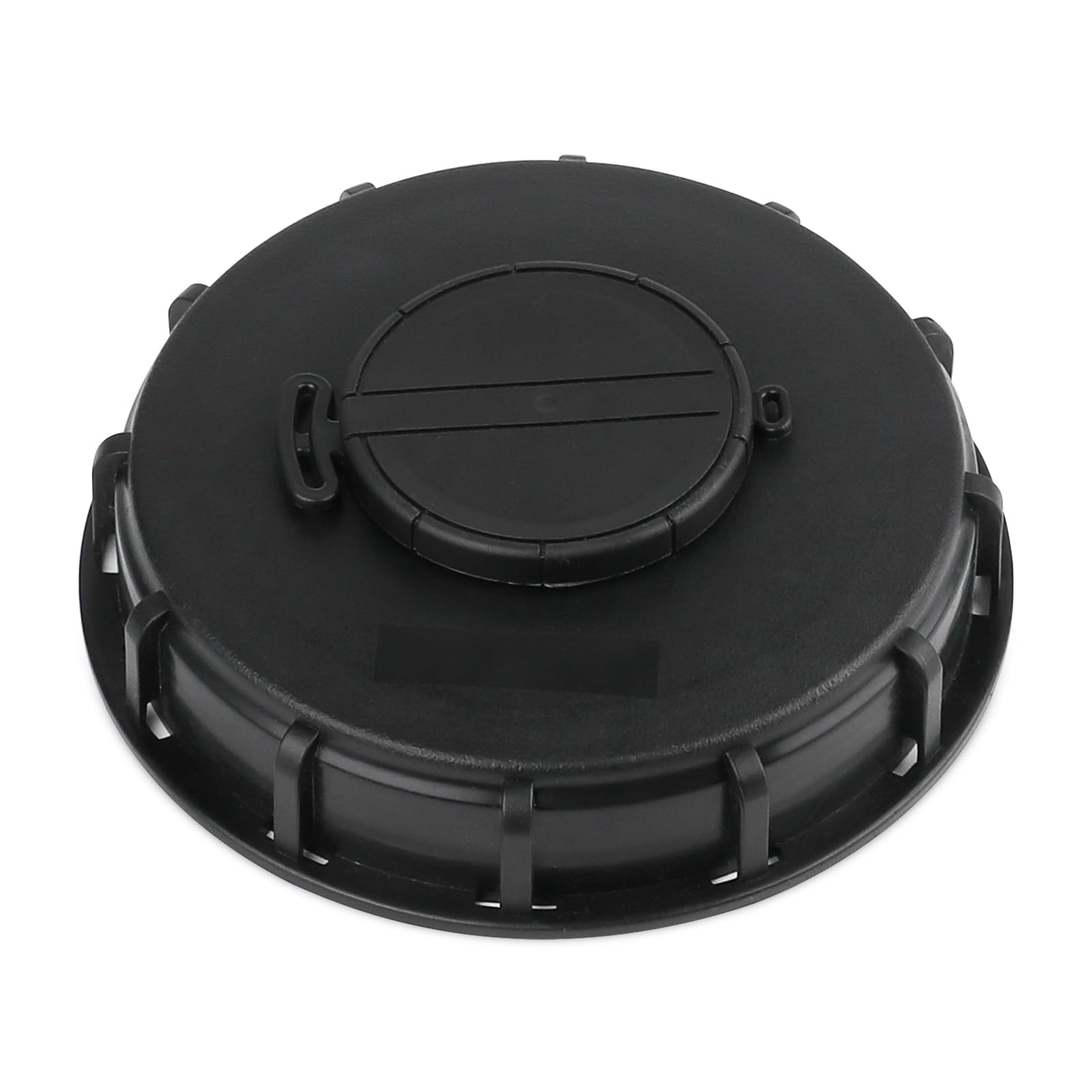
The PineHaven is the pick for anyone who's snapped a thin replacement cap and wants to avoid repeating that experience. Thicker walls than standard HDPE caps, an included gasket that restores a reliable seal over worn threads, and a vent hole that handles both filling and draw applications. Buyers consistently note it feels more substantial than original caps and that the gasket makes a material difference for sealed storage.
- Thicker HDPE construction — more durable than standard replacement caps
- Included gasket for a leak-resistant seal over worn original threads
- Vent hole for pressure relief during filling and draw
- Fits standard 6.5" IBC fill openings

The QWORK Red is the straightforward choice — snaps onto standard 6.5" openings, fits better than many worn original caps, and the vent hole handles both filling and gravity draw without vacuum buildup. Food-safe HDPE, dishwasher safe, and widely available. The best cap to keep as a spare.
- Reliable snap closure on standard 6.5" IBC openings
- Single vent for filling and pressure equalization
- Food-safe HDPE; dishwasher safe
- Compatible with common hose adapter fittings

The double vent hole is the differentiator here — air escapes twice as fast during rapid fills, eliminating the gurgling and slow-fill problem common with single-vent caps. Also better for gravity draw applications where a single vent struggles to equalize pressure fast enough to maintain steady flow. The most practical upgrade over a standard vented cap if you fill frequently or at high volume.
- Double vent for faster air exchange — eliminates gurgling during rapid fills
- Better gravity draw performance than single-vent caps
- Compact, durable polyethylene construction
- Suitable adapter mounting point for hose or tubing routing
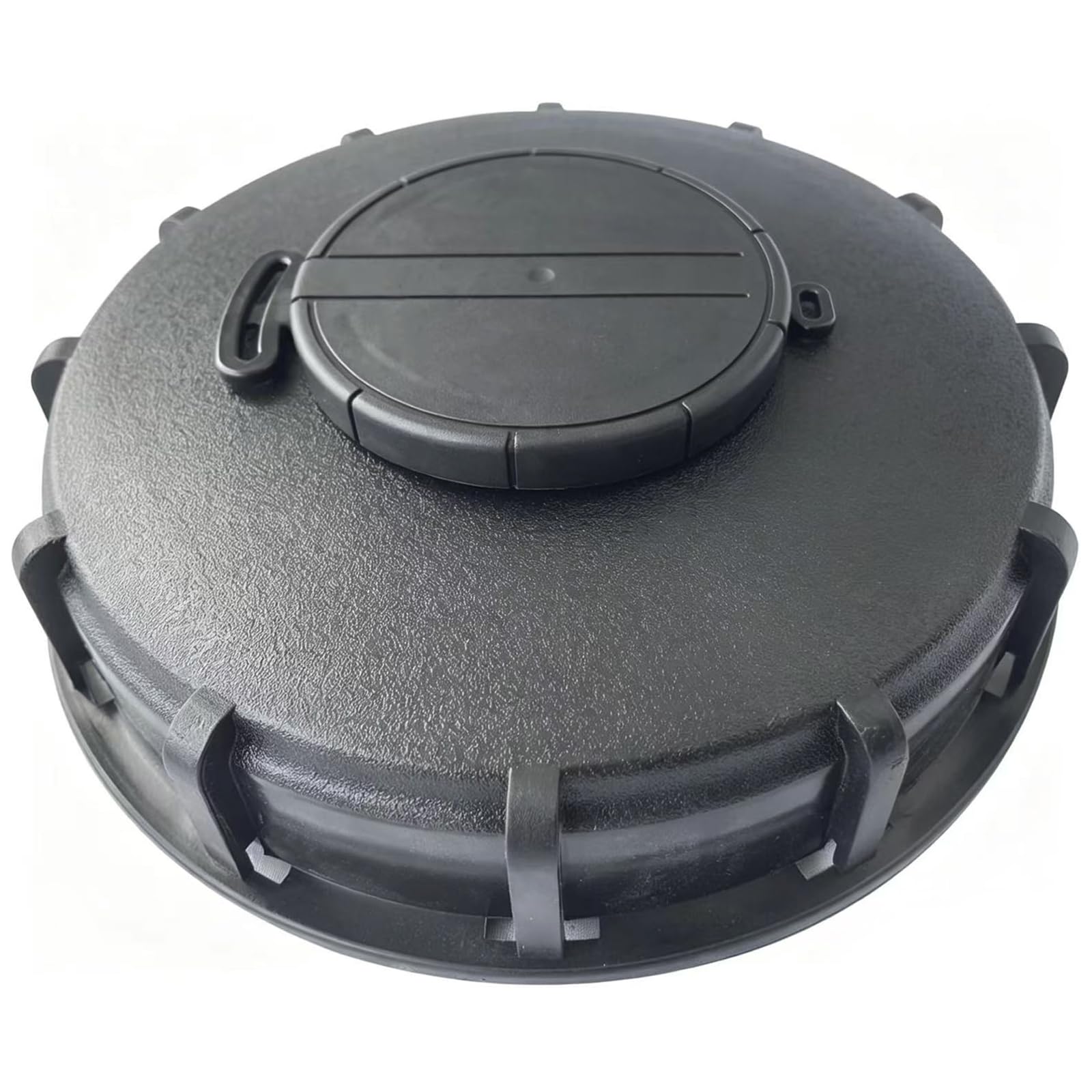
The gasket is the key feature — it compresses against the fill opening to create a positive seal even on threads that are slightly worn or mismatched. Better for transport and long-term sealed storage than ungasketed caps. The vent hole keeps it functional for filling and draw applications without removing the cap.
- Included gasket creates a positive seal on worn or slightly mismatched threads
- Best choice for transport where any seepage at the top is unacceptable
- Vent hole retains filling and draw functionality
- HDPE construction; food-safe and chemical-resistant
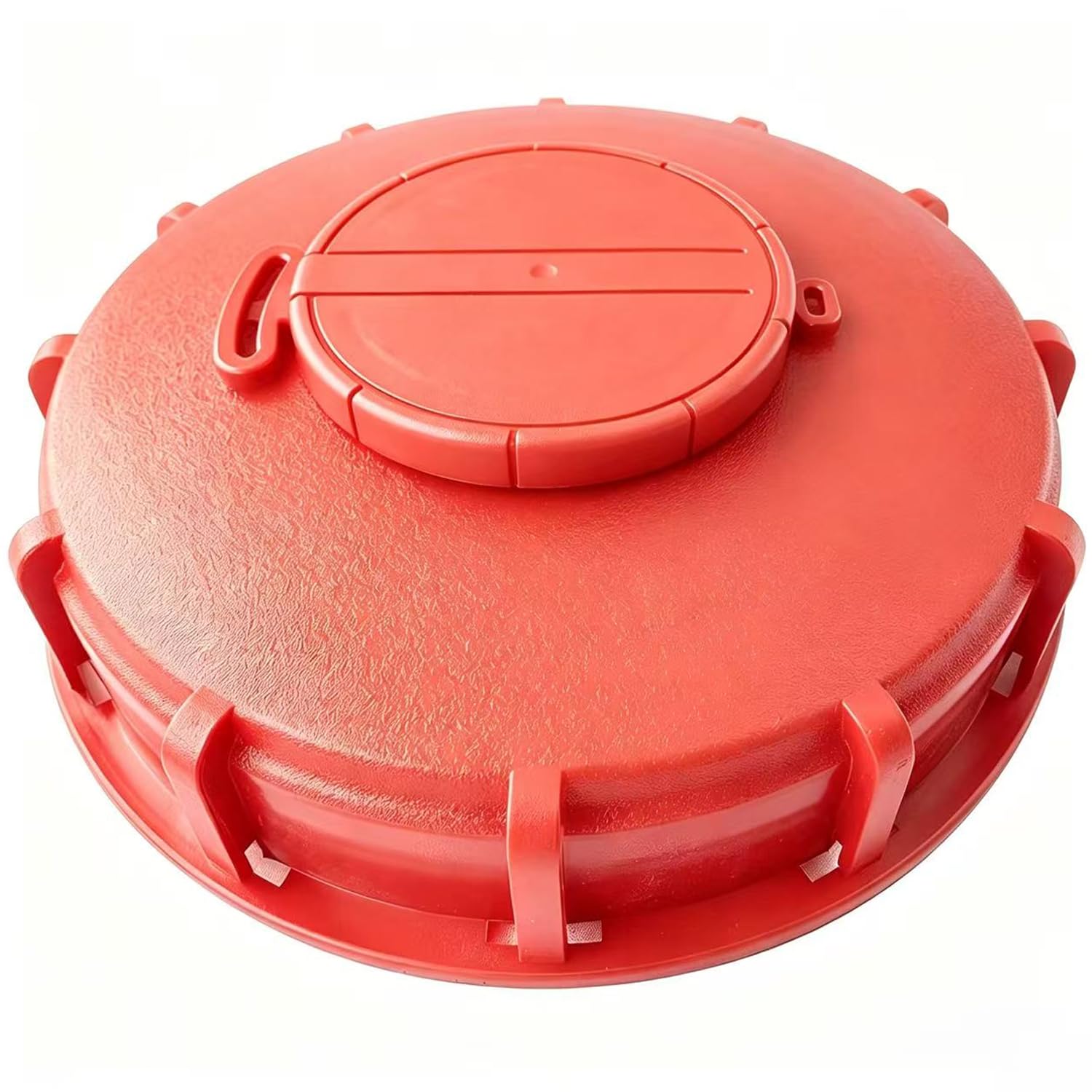
Same gasketed design as the black version, in red for visual identification when you have multiple totes with different contents. The red color is particularly useful in water storage setups where you want to distinguish potable from non-potable totes at a glance. Performance is identical to the black MDDEYEMEFO.
- Red color for visual identification across multiple totes
- Gasket seal for leak-resistant closure
- Vent hole for pressure equalization
- HDPE construction with food-safe rating

The 2" fine-thread plug port is what makes this cap useful beyond basic replacement. The plug can be removed to route a garden hose, a heater cord (for off-grid cabin freeze protection), or a small fill line directly through the cap without opening the main 6.5" lid. Popular in rain barrel setups where you want a dedicated small fill port for a downspout diverter. Also helps prevent algae by replacing cracked or missing caps that expose water to sunlight.
- 2" fine-thread port in the cap body for cords, small hoses, or fill lines
- Useful for rain barrel downspout diverter routing without removing the main cap
- Compact profile for totes in tight spaces
- Snap closure excludes debris and pests

The lighter, slimmer profile version of the QWORK Red. Performs identically for standard replacement and everyday fill applications. At 178g versus 229g, the reduced weight is marginal in practice — the main reason to choose this over Style A is if the slimmer profile fits a tight installation where the thicker cap sits proud of a lid housing.
- Lighter and slimmer profile than Style A — useful in tight lid installations
- Single vent for standard filling and draw
- Food-safe HDPE; dishwasher safe
- Lowest cost per cap in this guide
All 7 Picks at a Glance
| Cap | Vent | Gasket | Material | Special Feature | Best For |
|---|---|---|---|---|---|
| PineHaven | Single | ✅ Yes | HDPE (thick) | Heaviest walls of all picks | Best build quality; long-term use |
| QWORK Red A | Single | No | HDPE | 229g; heavier of the QWORK pair | Best overall replacement |
| QWORK Black | Double | No | Polyethylene | Two vent holes for faster air exchange | Fast fills; gravity draw |
| MDDEYEMEFO Black | Single | ✅ Yes | HDPE | Positive seal on worn threads | Transport; sealed long-term storage |
| MDDEYEMEFO Red | Single | ✅ Yes | HDPE | Red for tote identification | Multi-tote setups; visual ID |
| DVECUE | None | No | Plastic | 2" fine-thread port in cap body | Rain barrels; cord/hose routing |
| QWORK Red B (Slim) | Single | No | HDPE | 178g; slimmer profile | Best value; tight lid housings |
Gasket Repair, Failure Modes & Stuck Cap Removal
Gasket-Only Repair — Often the Real Fix
If your IBC tote cap leaks at the thread seal, the gasket or O-ring is the most likely cause — not the cap body itself. Before replacing the entire cap, inspect the gasket: it should be soft, pliable, and uniformly thick with no cracks or compression set. If it is hard, cracked, or shows a flat ring where it was previously compressed, replace the gasket first.
Measure the existing gasket's inner diameter, outer diameter, and thickness. Take these measurements to a plumbing supply or industrial supply store (Grainger, McMaster-Carr, Zoro) and order a matching food-safe EPDM gasket or silicone O-ring. Common size for 6.5" caps: approximately 5.5" ID × 6.5" OD × 3/16" thick — but measure yours before ordering. A replacement gasket costs $2–$8 and typically solves the leak.
Why Caps Fail
- UV embrittlement: HDPE degrades under prolonged UV exposure, becoming chalky and brittle. Caps stored outdoors without shade are particularly vulnerable — they crack at the lug tabs under normal torque. Solution: cover or shade the top of totes stored outdoors; use UV-stabilised caps where available.
- Overtightening: IBC tote caps are not pipe fittings — they seat on a gasket, not thread metal-to-metal. Overtightening cracks the cap body at the lug tabs or deforms the gasket unevenly. Finger-tight plus a quarter-turn is sufficient. If you need a wrench to close it, the gasket may be missing or the threads may be damaged.
- Cracked lug tabs: The tabs used to open the cap (usually 2–4 protrusions on the cap body) are the highest-stress point. Cracked tabs mean the cap is at or past end of life — replace it rather than attempting to use it, as it will fail to seal reliably or become permanently stuck.
Stuck Cap Removal
A cap that has been in service long-term, especially on a tote exposed to heat cycling, can bond to the threads through a combination of thread deformation and residue buildup. In order of escalation:
- IBC lid wrench / spanner: A dedicated IBC tote lid wrench that engages the cap lug tabs provides far more torque than a hand grip. Available from IBC accessory suppliers for $15–$40. This is the correct tool — use it before anything else.
- Strap wrench: A rubber strap wrench wrapped around the cap body provides grip without damaging the tabs. Combine with the lid wrench if the cap is badly stuck.
- Heat (carefully): Applying heat to the cap area with a heat gun (not open flame) softens the HDPE slightly and can break a fused seal. Keep the heat gun moving; do not overheat.
- What not to do: Do not use a pipe wrench, pliers, or bar through the lug tabs — this fractures the tabs and may make the cap unremovable without cutting it off. Do not use impact tools on plastic caps.
Mosquito Screening for Rain Barrel Use
IBC totes used as rain barrels must exclude mosquitoes from the open fill path — a water-filled IBC is an ideal mosquito breeding habitat. The practical solution is a mesh screen between the cap and the fill opening, or built into the cap itself.
- Use 1mm or finer mesh (approximately 20-mesh or finer) to exclude adult mosquitoes — coarser mesh does not block mosquito entry.
- Cut a circle of fine stainless steel mesh or fiberglass window screen slightly larger than the fill opening. Place it beneath the cap gasket before seating the cap — the cap compresses it against the fill opening rim.
- The DVECUE 2"-port cap reviewed above can have its main fill area screened while routing the downspout hose through the 2" port — keeping the main cap closed and screened while still allowing water to enter.
- Inspect and replace the screen each season — organic material trapped in the mesh can clog the fill path or harbor bacteria.